
In the year 2000, a friend[1] of mine made a surprising promise: he would predict a future event that I would later be able to verify. Naturally skeptical, I urged him to write it down, assuming it was just a game. He handed me a sealed envelope with the words “Open on January 1, 2020” written on the front.
When the day finally arrived, I opened the envelope with curiosity, having kept that date in mind for two decades. The message inside read: “On this date, January 1, 2020, a child is to be born at Mount Sinai Hospital in New York City.”
At first, I was unimpressed. Anyone could have made such a generic statement, and the odds were high that a child would indeed be born there on that date. Still, I called the hospital to verify—and, as expected, a boy had been born that day. But did this make my friend a “prophet”? Of course not. As I said, anyone could have predicted that.
Now imagine the letter had gone further: “A child is due at Mount Sinai Hospital in New York City on this date, January 1, 2020, and the mother’s name is Rosalba.” If I had called the hospital and learned that someone named Rosalba had indeed given birth that day, I would have been impressed—but not convinced of prophecy. After all, it is plausible that someone with that name gave birth there.
But what if the letter had said this: “A child is to be born at Mount Sinai Hospital in New York City on January 1, 2020. His father’s name is Carlos Martínez, and his mother’s name is Rosalba Pérez. He is Venezuelan and she is Ecuadorian. It is their first child. Carlos is thirty years old, and Rosalba is twenty-four. The child will be named Felipe.”
And what if the hospital confirmed that Felipe, the couple’s first child, had indeed been born that day to Rosalba Pérez, a 24-year-old Ecuadorian woman, and Carlos Martínez, a 30-year-old Venezuelan man?
At that point, two explanations would remain: My friend truly had the ability to predict the future, or he randomly guessed a highly specific sequence of names, nationalities, ages, relationships, and events—and somehow got it all exactly right.
But how likely is it that he simply fabricated all that detailed information… and happened to be right on every count?
I provide a brief overview of the fascinating field of probability in Appendix B but understanding just how difficult it is to accurately guess all the details from my previous example does not require advanced mathematics. Most people are familiar with lottery, which serve as a relatable illustration.
Imagine a raffle with only nine tickets. Winning in that case would seem quite easy. Now, increase the number to ninety-nine tickets. The chances of winning suddenly diminish. And if there were 999,000 tickets, it would become extraordinarily difficult to win—almost impossible, in fact. The larger the pool, the smaller the probability of selecting the correct outcome by chance.
What my friend did when he made his prediction was something much more complex than simply picking a winning number. He selected one city out of all the cities in the world. He specified a single date from an enormous range of possible dates. He named two individuals, choosing a man and a woman from countless possible names. He gave their ages, their nationality, and even the name that would be given to their child. Each of these choices, taken alone, would already be unlikely to guess correctly. Taken together, the odds become astronomically small—so small that the idea of it being a coincidence becomes almost impossible to accept.
If every detail in that prediction turned out to be accurate, then there would be only one reasonable conclusion: my friend was not guessing. He had somehow foreseen an event twenty years into the future and committed it to writing. The only explanation left is that he possessed an extraordinary ability—something that could rightly be called prophetic.
The case of Jesus of Nazareth followed a strikingly similar pattern. Over the span of hundreds of years, numerous prophets provided detailed information that all pointed toward a single person: the Messiah. These individuals had never met each other. Many lived on different continents, spoke different languages, and belonged to different historical periods, yet they consistently conveyed prophecies that aligned with the life of one man. They foretold details about his birthplace, the timing of his arrival, the identity of his parents, key events surrounding his life, his companions and enemies, his miracles, his actions, the way he would die, the betrayal by Judas, the desertion of his apostles, and even his resurrection, along with many other aspects of his existence.
Can all of this be dismissed as coincidence? Was it simply good fortune? Or does it point to a far deeper truth—one that reveals who truly authored the Bible?
Many people associate prophets primarily with their role in predicting future events, but it is essential to understand the full scope of their mission. While foretelling was certainly part of their responsibility, it was by no means their primary role, nor their most important one. The core of their calling was spiritual: to guide the people in placing their trust fully in God and to urge them to remain faithful to His covenant. Whether delivering divine instruction or issuing warnings to Israel about the consequences of turning to other gods, the prophets were deeply involved in every stage of Israel’s spiritual journey.
Their messages were always rooted in the historical realities of their time. They encouraged the people to uphold their covenant with the Most High, even during hardship, and constantly warned against the seductions of polytheism—which was widespread among the neighboring nations. Pagan rituals, idolatry, and syncretism posed constant threats to the purity of Israel’s worship, and the prophets stood as relentless voices calling the people back to true devotion.
Because of their uncompromising stance against anything contrary to God’s plan—whether it was social injustice, immorality, corruption, or idolatry—they often found themselves in conflict with kings, priests, and religious authorities, many of whom had grown lax or deliberately ignored the laws that had been given through Abraham’s covenant.
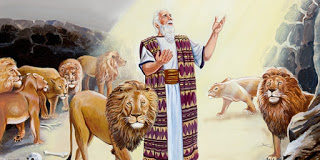
Despite their sacred role, many prophets had everyday professions. Jeremiah and Ezekiel were priests. Moses and Amos were shepherds. Deborah served as a judge, Ezra was a teacher, Daniel a royal counselor, Nehemiah a cupbearer to the king, and Job a herder. Yet all of them shared a common duty: to fulfill their earthly responsibilities while proclaiming God’s will and exposing any deviation from His divine purpose. They were not simply predictors of the future—they were guardians of truth, messengers of righteousness, and witnesses to the holiness of God in a world filled with compromise.
Being a prophet in Old Testament times was an extremely dangerous calling. The Jewish people understood well the serious consequences for anyone who falsely claimed to speak on behalf of God. According to God’s own warning, a death sentence awaited those who were found to be false prophets. Those who prophesied were warned:
The Lord, your God, will raise up from among your countrymen a prophet who will do what I have done for you, and you will listen to him. This is just as you asked the Lord, your God, at Horeb on the day of the assembly when you said, “Let me not hear the voice of the Lord, my God, anymore, nor look upon this great fire, lest I die.” The Lord said to me, “They have spoken well. I will raise up a prophet from among their countrymen who will be like you. I will place my words in his mouth, and he will tell them all that I command him. I myself will call to account whoever does not heed my words that he will proclaim in my name. But if a prophet presumes to proclaim something in my name that I have not said to him, or he speaks in the names of other gods, that prophet is to be put to death.” You might say to yourself, “How can we know that the Lord did not speak the message?” If what the prophet proclaims in the name of the Lord is not true and it does not happen, then the message was not proclaimed by the Lord. The prophet has spoken presumptuously; you should not fear him.
(Deuteronomy 18:15-22)
Earlier in this chapter, I provided sufficient evidence that the current Bible can be compared with ancient papyri—or fragments of them—dating as far back as the eighth century bc. This confirms that the Old Testament, as we have it today, is the same text that existed at least eight hundred years before the birth of Jesus.
Why is this important? Because in the following sections, I will be quoting several Old Testament prophecies and explaining how they were fulfilled. I want to eliminate any possibility that someone might claim the prophetic texts were written after the events took place, to fabricate prophecy and falsely prove that Jesus was the Messiah.
That accusation is simply not true. The prophetic writings genuinely predate the birth of Christ by centuries. This is a well-documented fact, and you can verify it through the historical and archaeological sources I previously referenced—some of which are available through reputable academic and historical websites online.
The Bible does not claim that Jesus’ apostles were scholarly experts in all the Scriptures—what we now refer to as the Old Testament. However, they were certainly familiar with its first five books, known as the Pentateuch or the Torah, which they referred to as “the Law.” Among the twelve apostles, only John and Matthew wrote Gospels, while John, James, and Peter wrote epistles. In all these writings, they emphasized the continued relevance and importance of the Law.
On the day of the resurrection, two disciples encountered the risen Jesus on the road. After their meeting, they reflected on the experience and said to each other: “Wasn’t it true that our hearts were on fire when He talked to us on the road and taught us from the Bible?” (Luke 24:32)
What was it that Jesus said that moved them so deeply? What truth did He share that ignited such passion in their hearts?
Jesus must have revealed to them many—perhaps all—of the prophecies that had been written centuries before his birth, all pointing to the Messiah. He showed how these prophecies were fulfilled in his life, death, and resurrection. This profound understanding became so essential to the disciples that, when the evangelists later wrote their Gospels, they saw it as their sacred responsibility to pass on the knowledge Jesus had shared with them personally.
Through this, anyone—even without prior knowledge of Scripture—could examine the prophecies, compare them with the life of Jesus, and conclude that He truly was the Messiah foretold by the prophets.
I am now going to quote several biblical passages that support the fulfillment of Old Testament prophecies. In the vast majority of these, you will notice recurring phrases such as: “this happened so that the Scripture that says […] might be fulfilled,” or “but this happened to fulfill the word that is written in the Law […]”, or “then what was said by the prophet […] was fulfilled,” and “all this has happened so that the Scriptures of the prophets may be fulfilled,” or simply “because it is written […].”
The evangelists deliberately used such language to make it clear to readers that the events they were recording were not random or coincidental. Rather, these events represented the fulfillment of specific prophecies spoken by the prophets long before. Their intention was to help us recognize the deeper meaning behind these occurrences and to show that Jesus was indeed the Messiah, foretold in the Scriptures.
Prophecy one: The Messiah would be the son of God. With this prophecy, Judaism would be the only religion that would proclaim God made man.
|
Prophecy |
Fulfilment |
|
I will proclaim the decree of the Lord: He said to me, “You are my son; this day I have begotten you.” Simply make the request of me, and I will give you the nations as your inheritance, and the ends of the earth as your possession. You will rule them with an iron scepter; you will shatter them like a potter’s vessel. (Psalms 2:7-9). When your days have been fulfilled and you go to be with your fathers, I will raise up your seed after you, one of your sons, and I will establish his kingdom. He will build a house for me, and I will establish his throne forever. I will be his father, and He will be my son. I will not withdraw my mercy from him, as I took it away from the one who preceded you. I will have him stand firm in my house forever, and his throne will be established forever. (1 Chronicles 17:11-14). |
After Jesus had been baptized, as He came up from the water, suddenly the heavens were opened and He beheld the Spirit of God descending like a dove and alighting on him. And a voice came from heaven, saying, “This is my beloved Son, in whom I am well pleased.” (Matthew 3:16-17). |
Prophecy Two: He would be born of a woman, which implies that it would not simply appear “out there” without any knowledge of its origin. He would be as human as any of us in the flesh. Mary and her descendant, Jesus, would be the woman of the prophecy.
|
Prophecy |
Fulfilment |
|
The Lord God said to the serpent, “Because you have done this, you will be the most cursed of all the animals and of all the wild beasts. On your belly you shall crawl and you shall eat dust for all the days of your life. I will establish hostility between you and the woman, between your line and her line. Her offspring will crush your head and you will bruise his heel.” (Genesis 3:14-15). |
The birth of Jesus Christ occurred in this way. When his mother Mary was engaged to Joseph, but before they came to live together, she was found to be with child through the Holy Spirit. (Matthew 1:18). |
Prophecy Three: He would be born to a virgin, meaning that her pregnancy would not be the result of a relationship with a male, as she would conceive without losing her virginity. I dedicated an entire chapter to this enigma in my debut book, What You Wanted to Know About the Catholic Church but Were Afraid to Ask.
|
Prophecy |
Fulfilment |
|
Therefore, you will be given this sign by the Lord himself: The virgin will be with child, and she will give birth to a son, and she will name him Immanuel. (Isaiah 7:14). |
The birth of Jesus Christ occurred in this way. When his mother Mary was engaged to Joseph, but before they came to live together, she was found to be with child through the Holy Spirit. (Matthew 1:18). |
Prophecy Four: He would be a descendant of Abraham.
|
Prophecy |
Fulfilment |
|
The Lord said to Abram, “Leave your country, your people, and the house of your father, and go to the land to which I will lead you. “I will make of you a great people and I will bless you. I will make your name great and it will become a blessing. I will bless those who bless you and curse those who curse you. And through you all the nations on the earth shall be blessed.” (Genesis 12:1-3). |
The account of the genealogy of Jesus Christ, the son of David, the son of Abraham. (Matthew 1:1). |
Prophecy five: Two of Abraham’s offspring were particularly noteworthy: Isaac and Ishmael. Esau and Jacob were the twin offspring of the latter. Jacob was the father of twelve offspring, from whom the twelve tribes of Israel were descended (Genesis 32:28—God changed Jacob’s name to Israel). The Messiah would be a descendant of Judah, the fourth of the twelve sons.
|
Prophecy |
Fulfilment |
|
The scepter shall not depart from Judah nor the mace from between his feet, until it comes to whom it belongs, and the obedience of the peoples is his. (Genesis 49:10). |
The account of the genealogy of Jesus Christ, the son of David, the son of Abraham. Abraham was the father of Isaac, Isaac the father of Jacob, Jacob the father of Judah and his brothers. Judah was the father of Perez and Zerah, with Tamar being their mother. Perez was the father of Hezron, Hezron the father of Ram. (Matthew 1:1-3). |
Prophecy Six: He would be a descendant of Jesse, the father of King David.
|
Prophecy |
Fulfilment |
|
A shoot will spring forth from the stump of Jesse, and a branch will grow from his roots. The Spirit of the Lord will rest upon him: Spirit of wisdom and understanding, a Spirit of counsel and power, a Spirit of knowledge and fear of the Lord, (Isaiah 11:1-2). |
The account of the genealogy of Jesus Christ, the son of David, the son of Abraham. […] Obed was the father of Jesse, and Jesse was the father of King David. (Matthew 1:1-6). |
Prophecy Seven: He would be a descendant of King David. The Messiah was prophesied to be the youngest of Jesse’s eight sons and a descendant of David.
|
Prophecy |
Fulfilment |
|
Behold, the days are coming, says the Lord, when I will raise up a righteous branch from the line of David. He will reign as king and rule wisely and ensure justice and righteousness in the land. (Jeremiah 23:5). |
The account of the genealogy of Jesus Christ, the son of David, the son of Abraham. (Matthew 1:1). |
Prophecy eight: He would be born in the city of Bethlehem.
|
Prophecy |
Fulfilment |
|
But from you, O Bethlehem Ephrathah, among the tiniest of the clans of Judah, from you will come forth for me one who is to be a ruler in Israel, one whose origins are from the distant past, from ancient times. (Micah 5:1). |
After Jesus had been born in Bethlehem of Judea during the reign of King Herod. (Matthew 2:1). |
Prophecy Nine: Kings would travel from distant lands to present gifts to the Messiah.
|
Prophecy |
Fulfilment |
|
The kings of Tarshish and the Islands will offer him tribute; the kings of Sheba and Seba will present him with gifts. (Psalm 72:10). Droves of camels will cover your land, the young camels from Midian and Ephah; all from Sheba will come, laden with gold and frankincense, while the people proclaim the praises of the Lord. (Isaiah 60:6). |
After Jesus had been born in Bethlehem of Judea during the reign of King Herod, wise men traveled from the east and arrived in Jerusalem, […] And behold, the star that they had seen at its rising proceeded ahead of them until it stopped over the place where the child was. […] Then they opened their treasure chests and offered him gifts of gold, frankincense, and myrrh. (Matthew 2:1-11). |
Prophecy ten: When monarch Herod heard the rumors regarding the birth of the Messiah, who would become the monarch of Israel, he would commit the slaughter of children under the age of two.
|
Prophecy |
Fulfilment |
|
Thus says the Lord: A voice is heard in Ramah marked by lamentation and bitter weeping. Rachel is mourning for her children, and she refuses to be consoled because they are no more. (Jeremiah 31:15). |
When Herod realized that the wise men had deceived him, he flew into a rage and issued an order to kill all the boys in Bethlehem and the surrounding area who were two years old or less, in accordance with the information that he had obtained from the wise men. (Matthew 2:16). |
Prophecy eleven: He would be called the Lord.
|
Prophecy |
Fulfilment |
|
The Lord says to my Lord: “Sit at my right hand until I have made your enemies a footstool for you.” (Psalm 110:1). |
But the angel said to them, “Do not be afraid, for I bring you good news of great joy for all the people. 11 For this day in the city of David there has been born to you a Savior who is Christ, the Lord. (Luke 2:10). |
Prophecy twelve: He would be referred to as Emmanuel, which translates to “God with us.” In other words, He would be a human being with flesh and blood.
|
Prophecy |
Fulfilment |
|
Therefore, you will be given this sign by the Lord himself: The virgin will be with child, and she will give birth to a son, and she will name him Immanuel. (Isaiah 7:14). |
Fear seized all who were present, and they glorified God, saying, “A great prophet has risen among us,” and “God has visited his people.” (Luke 7:16). |
Prophecy Thirteen: He would be recognized as a prophet.
|
Prophecy |
Fulfilment |
|
The Lord said to me, “They have spoken well. I will raise up a prophet from among their countrymen who will be like you. I will place my words in his mouth, and He will tell them all that I command him. (Deuteronomy 18:17-18). |
And when He entered Jerusalem, the whole city was filled with excitement. “Who is this?” the people asked, and the crowds replied, “This is the prophet Jesus from Nazareth in Galilee.” (Matthew 21:10-11). |
Prophecy Fourteen: He would be recognized as a high priest.
|
Prophecy |
Fulfilment |
|
The Lord has sworn, and He will not retract his oath: “You are a priest forever according to the order of Melchizedek.” (Psalm 110:4). |
Therefore, holy brethren, who share in a heavenly calling, concentrate your thoughts on Jesus, the apostle and the high priest of our profession of faith. (Hebrews 3:1). |
Prophecy fifteen: He would be recognized as king.
|
Prophecy |
Fulfilment |
|
I myself have anointed my king on Zion, my holy mountain. (Psalm 2:6). |
Above his head was inscribed the charge against him: “This is Jesus, the King of the Jews.” (Matthew 27:37). |
Prophecy sixteen: An emissary would be responsible for making the announcement of the Messiah’s arrival. This individual is named John the Baptist.
|
Prophecy |
Fulfilment |
|
Behold, I am sending my messenger to prepare the way before me. And suddenly the Lord whom you seek will come to the temple, as well as the messenger of the covenant in whom you delight. Indeed, He is coming, says the Lord of hosts. (Malachi 3:1). A voice cries out: In the wilderness prepare the way of the Lord; make a straight path in the desert for our God. (Isaiah 40:3). |
In those days, John the Baptist appeared in the desert of Judea, preaching: “Repent, for the kingdom of heaven is close at hand.” (Matthew 3:2). |
Prophecy Seventeen: His ministry would begin in the Galilee region.
|
Prophecy |
Fulfilment |
|
But there will be no gloom for those who were in anguish. In the former time he brought into contempt the land of Zebulun and the land of Naphtali, but in the latter time He will make glorious the way of the sea, the land beyond the Jordan, Galilee of the nations. (Isaiah 9:1). |
When Jesus learned that John had been arrested, He withdrew to Galilee. Departing from Nazareth, He settled in Capernaum by the sea, in the region of Zebulun and Naphtali, […] From that day forward Jesus began to proclaim the message: “Repent, for the kingdom of heaven is close at hand.” (Matthew 4:12-17). |
Prophecy Eighteen: He would perform numerous miracles and cure an infinite number of illnesses.
|
Prophecy |
Fulfilment |
|
Then the eyes of the blind will be opened and the ears of the deaf will no longer be sealed. Then the lame will leap like a stag and the tongue of the dumb will shout joyfully. (Isaiah 35:5-6). |
Jesus traveled through all the towns and villages, teaching in their synagogues, proclaiming the good news of the kingdom, and curing every kind of illness and disease. (Matthew 9:35). |
Prophecy nineteen: His preaching would be in the form of parables.
|
Prophecy |
Fulfilment |
|
I will open my mouth in parables and expound the mysteries of the past. These things we have heard and know, for our ancestors have related them to us. (Psalm 78:2-3). |
Jesus told the crowds all these things in parables. Indeed, He never spoke to them except in parables. (Matthew 13:34). |
Prophecy Twenty: He would enter Jerusalem mounted on a donkey and be proclaimed king.
|
Prophecy |
Fulfilment |
|
Rejoice with all your heart, O daughter Zion. Shout for joy, O daughter Jerusalem. See, your king is coming to you, triumphant and victorious, humble and riding on a donkey, on a colt, the foal of a donkey. (Zechariah 9:9). |
Then they brought the colt to Jesus, and after spreading their cloaks over the colt, they helped Jesus to mount it. As he rode along, people kept spreading their cloaks on the road. And when he approached the downward path of the Mount of Olives, the entire multitude of his disciples began to praise God joyfully with a loud voice for all the mighty works they had seen him perform, (Luke 19:35-37). |
Prophecy twenty-one: He would not remain in a state of death; rather, He would resurrect. This enigma was the subject of an entire chapter in my debut book, What You Wanted to Know About the Catholic Church but Were Afraid to Ask. The entire third chapter of this work will later coalesce around this critical issue, which is a cornerstone of our religion.
|
Prophecy |
Fulfilment |
|
For you will not abandon me to the netherworld or allow your Holy One to suffer corruption. (Psalm 16:10). |
But the angel said to the women, “Do not be afraid! I know that you are looking for Jesus who was crucified. He is not here, for He has been raised, as He promised He would be. Come and see the place where He lay. (Matthew 28:5-6). |
Prophecy twenty-two: One of his closest friends, the apostle Judas, would be the one to betray him.
|
Prophecy |
Fulfilment |
|
Even my friend whom I trusted, the one who dined at my table, has risen up against me. (Psalm 41:10). And if anyone asks him, “What are these wounds on your chest?” he will reply, “I received them in the house of my friends.” (Zechariah 13:6). |
While He was still speaking, Judas, one of the Twelve, arrived. With him there was a large crowd of men, armed with swords and clubs, who had been sent by the chief priests and the elders of the people. Now his betrayer had agreed with them on a signal, saying, “The one I shall kiss is the man. Arrest him.” Proceeding directly to Jesus, he said, “Greetings, Rabbi!” and kissed him. (Matthew 26:47-49). |
Prophecy Twenty-Three: The traitor would receive thirty pieces of silver in return.
|
Prophecy |
Fulfilment |
|
Therefore, it was annulled on that day, and the dealers who were watching me realized that this was the word of the Lord. I said to them, “If it seems right to you, give me my wages; if not, then forget about it.” Then they weighed out my wages, thirty pieces of silver. (Zechariah 11:11-12). |
[…] and asked, “What are you willing to give me if I hand him over to you?” They paid him thirty pieces of silver, and from that moment he began to look for an opportunity to betray him. (Matthew 26, 15-16). |
Prophecy Twenty-Four: That money would be thrown into the temple.
|
Prophecy |
Fulfilment |
|
However, the Lord said to me, “Throw it into the treasury—the princely sum at which they valued my efforts.” Therefore, I took the thirty pieces of silver and threw them into the treasury of the house of the Lord. (Zechariah 11:13). |
Flinging the silver pieces into the temple, he departed. Then he went off and hanged himself. (Matthew 27:5). |
Prophecy Twenty-Five: During his simulated trial, sentence, and execution, his disciples would abandon him.
|
Prophecy |
Fulfilment |
|
Awake, O sword, against my shepherd, against the man who is my associate, says the Lord of hosts. Strike the shepherd, so that the sheep may be scattered, and I will turn my hand against their young (Zechariah 13:7). On that day, every prophet will be ashamed to relate his own prophetic vision, and he will not wear a hairy mantle in order to deceive. Rather, he will say, “I am no prophet. I am a tiller of soil, for the land has been my possession since my youth.” And if anyone asks him, “What are these wounds on your chest?” he will reply, “I received them in the house of my friends.” (Zechariah 13:4-6). |
Then everyone deserted him and fled. (Mark 14:50). |
Prophecy Twenty-Six: At the supposed trial, He would be accused by false witnesses.
|
Prophecy |
Fulfilment |
|
False witnesses step forward and question me about things I do not know. (Psalm 35:11). |
The chief priests and the whole Sanhedrin tried to elicit some false testimony against Jesus so they could put him to death, (Matthew 26:59). |
Prophecy Twenty-Seven: He would not defend himself during the simulated trial; rather, He would remain silent.
|
Prophecy |
Fulfilment |
|
Although harshly treated and afflicted, He did not open his mouth. Like a lamb led to the slaughter and like a sheep that keeps silent before its shearers, He did not open his mouth. (Isaiah 53:7). |
But He did not offer a single word in response, much to the governor’s amazement (Matthew 27:14). |
Prophecy Twenty-Eight: He would endure severe torture, have his face spat upon, and be pummeled to a pulp.
|
Prophecy |
Fulfilment |
|
I offered my back to those who struck me, my cheeks to those who plucked my beard. I did not shield my face from insults and spitting. (Isaiah 50:6). But He was pierced for our offenses and crushed for our iniquity; the punishment that made us whole fell upon him, and by his bruises we have been healed. (Isaiah 53:5). My knees are weak from fasting; my flesh is wasting away. (Psalm 109:24). |
Then they spat in his face and struck him with their fists. Some taunted him as they beat him, (Matthew 26:67). They also spat upon him and, taking the reed, used it to strike him on the head. (Matthew 27:30). He then released Barabbas to them, and after Jesus had been scourged, he handed him over to be crucified. (Matthew 27:26). |
Prophecy twenty-nine: He would be mocked by many during his passion.
|
Prophecy |
Fulfilment |
|
But I am a worm and not human, scorned by people and despised by my kinsmen. All who see me jeer at me; they sneer in mockery and toss their heads. (Psalm 22:7-8). |
and after twisting some thorns into a crown, they placed it on his head and put a reed in his right hand. Then, bending the knee before him, they mocked him, saying, “Hail, King of the Jews!” (Matthew 27:29). Those people who passed by jeered at him, shaking their heads and saying, “You who claimed you could destroy the temple and rebuild it within three days, save yourself! If you truly are the Son of God, come down from the cross!” (Matthew 27:39-40). |
Prophecy thirty: As a result of his crucifixion, his hands and feet would be punctured.
|
Prophecy |
Fulfilment |
|
A pack of dogs surrounds me; a band of evildoers is closing in on me. They have pierced my hands and my feet. (Psalm 22:17). |
When the other disciples told him, “We have seen the Lord,” he replied, “Unless I see the mark of the nails on his hands and put my finger into the place where the nails pierced and insert my hand into his side, I will not believe.” (John 20, 25). |
Prophecy thirty–one: Accompanied by criminals, He would be crucified.
|
Prophecy |
Fulfilment |
|
Therefore, I will allot him a portion among the great, and He will divide the spoils with the mighty, because He exposed himself to death and was counted among the transgressors, even though He bore the sins of many and interceded for the transgressors. (Isaiah 53:12). |
Two thieves were crucified with him, one on his right and the other on his left. (Matthew 27:38). |
Prophecy thirty-two: He would intercede for his transgressors during his passion.
|
Prophecy |
Fulfilment |
|
Therefore, I will allot him a portion among the great, and He will divide the spoils with the mighty, because He exposed himself to death and was counted among the transgressors, even though He bore the sins of many and interceded for the transgressors. (Isaiah 53:12). |
hen Jesus said, “Father, forgive them, for they do not know what they are doing.” (Luke 23:34). |
Prophecy thirty-three: He would be rejected by his own people.
|
Prophecy |
Fulfilment |
|
He was despised and shunned by others, a man of sorrows who was no stranger to suffering. We loathed him and regarded him as of no account, as one from whom men avert their gaze. (Isaiah 53:3). |
For not even his brethren believed (John 7:5). |
Prophecy thirty-four: He would be hated for no reason.
|
Prophecy |
Fulfilment |
|
More numerous than the hairs of my head are those who hate me for no reason. Many are those who seek to destroy me, and they are treacherous. How can I restore what I have not stolen? (Psalm 69:5). |
If the world hates you, be aware that it hated me before it hated you. […] Whoever hates me hates my Father also. If I had not done works among them that no one else had ever done, they would not be guilty of sin. But now they have seen and hated both me and my Father. (John 15:18-24). |
Prophecy thirty-five: His acquaintances and associates would withdraw from him and establish a distance.
|
Prophecy |
Fulfilment |
|
My friends and companions stay away from my affliction, and my neighbors keep their distance. (Psalm 38:12). |
However, all his acquaintances, including the women who had followed him from Galilee, stood at a distance and watched all these events. (Luke 23:49). |
Prophecy thirty-six: They would take away her dress and draw lots for it.
|
Prophecy |
Fulfilment |
|
They divide my garments among them, and for my clothing they cast lots (Psalm 22:18). |
When the soldiers had crucified Jesus, they took his clothes and divided them into four shares, one share for each soldier. They also took his tunic, which was woven seamless, top to bottom. They said to one another, “Instead of tearing it, let us cast lots for it to see who is to get it.” In this way, the Scripture was fulfilled that says, “They divided my garments among them, and for my clothing they cast lots.” (John 19:23-24). |
Prophecy thirty-seven: He would experience intense dehydration during his martyrdom, and in lieu of water, they would administer gall with vinegar.
|
Prophecy |
Fulfilment |
|
They put gall in my food, and in my thirst, they gave me vinegar to drink. (Psalm 69:21). |
After this, aware that everything had now been completed, and in order that the Scripture might be fulfilled, Jesus said, “I thirst.” A jar filled with sour wine was standing nearby, so they soaked a sponge in the wine on a branch of hyssop and held it up to his lips. (John 19:28-29). |
Prophecy thirty-eight: His bones would not be fractured after his death, as was the customary practice to guarantee death for victims who had endured the lengthy crucifixion.
|
Prophecy |
Fulfilment |
|
He watches with care over all his bones; not a single one will be broken. (Psalm 34:20). |
However, when they came to Jesus and saw that He was already dead, they did not break his legs, (John 19:33). |
Prophecy thirty-nine: They would pierce his side.
|
Prophecy |
Fulfilment |
|
Further, I will pour out a spirit of grace and supplication on the house of David and on the inhabitants of Jerusalem so that they will look on me, the one whom they have pierced, and mourn for him as one mourns for an only son, and they will grieve over him as one grieves over a firstborn. (Zechariah 12:10). |
But one of the soldiers thrust a lance into his side, and immediately a flow of blood and water came forth. (John 19:34). |
Prophecy forty: A great darkness would cover the earth during the martyrdom of Jesus.
|
Prophecy |
Fulfilment |
|
On that day, says the Lord God, I will make the sun go down at noon and darken the earth in broad daylight. (Amos 8:9). |
Beginning at midday, there was darkness over the whole land until three in the afternoon. (Matthew 27:45). |
Prophecy forty-one: He would be buried in the tomb of a wealthy person.
|
Prophecy |
Compliance |
|
And His grave was assigned with wicked men, Yet He was with a rich man in His death (Isaiah 53:9). |
When evening came, there arrived a rich man from Arimathea named Joseph, who had himself become a disciple of Jesus. […] Joseph took the body, wrapped it in a clean linen shroud, and laid it in his own new tomb that he had hewn out of the rock. (Matthew 27:57-60). |
I have presented the fulfillment of only forty-one prophecies—out of more than three hundred—delivered by eight different prophets: Moses, Isaiah, Zechariah, King David, King Solomon, Jeremiah, Amos, and Micah. These men lived for almost two millennia, from the 14th century bc to the 5th century ad. They spoke in different languages, lived in different geographical regions, and belonged to distinct historical contexts, yet each one offered specific and detailed descriptions concerning the coming of the Messiah.
Is this merely coincidence? Is it just luck that these prophecies were fulfilled with such precision?
[1]This is a fictional character that I use to explain my point.