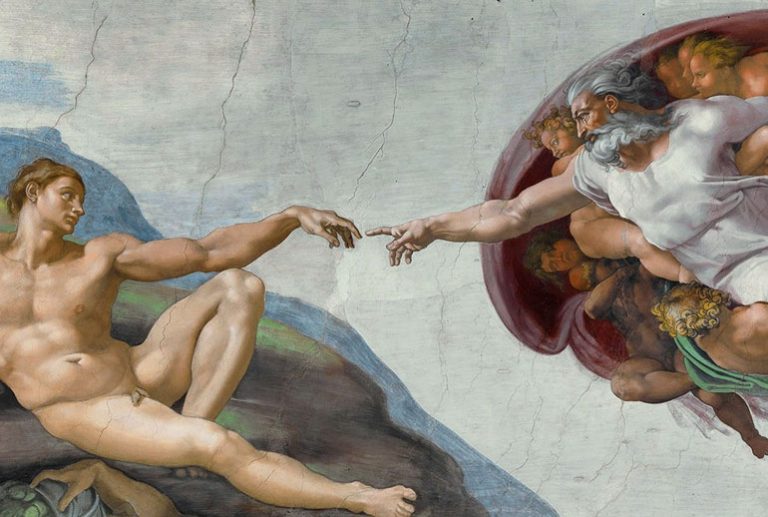

Do you think I have not answered clearly who God is?
The truth is that all our words and concepts fall short of explaining who He truly is. God is, by essence, mystery—a word that comes from the Greek muein, meaning to shut one’s mouth. Saint Augustine once said: “If you understand it, that is not God.”
It is easy for us to understand the world around us—what exists in time and space. We know that if Juan is over there, he cannot be here at the same time. He is Carlos; therefore, he is not Roberto. A table is not a chair. That is a mountain, and that is a bird.
From childhood, we learn to identify and name things through comparison and contrast. We group similar things under one word, and we distinguish them by what sets them apart. This is how we come to know and name everything in our world.
But with God, we cannot do the same.
We cannot say, “There’s a table, there’s a wall, Carlos is there, I am here—and God is over there.” Even St. Thomas Aquinas refused to classify God under any genus—He is not animal, vegetable, mineral, or even some divine category. There is no such genus. Not even the angels share in His nature. They have their own essence, distinct from ours—and God’s is different from all of them.
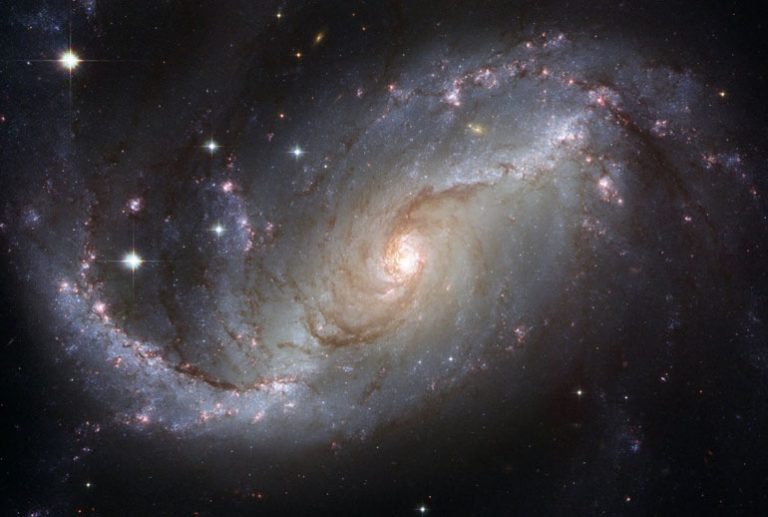
God is not one more “something” among all the things in the world or universe. He is not even the greatest “something.” We can say this building is bigger than that one; the Earth is bigger than all the buildings; the galaxy is bigger than the Earth; and the universe is greater than the galaxy. But God is not even the greatest thing in the universe.
God simply is.
Since God is infinite and perfect, no created being can fully comprehend His nature. He is utterly different from anything that exists or has existed. He is incomprehensible, inaccessible to our finite, limited minds.
As Saint Paul says:
He is the blessed and only Sovereign, the King of kings and Lord of lords, the only one who possesses immortality and dwells in unapproachable light, whom no one has seen or can see. To him be honor and eternal power. Amen. (1 Timothy 6:15–16)
Let me ask: do you fully understand your spouse or partner?
Even with a lifetime of shared experiences, common language, and communication, we often find that we cannot fully grasp the heart, thoughts, or mysteries of the person beside us—someone of flesh and blood. If we struggle to understand another human being, how much more should we expect to grasp the essence of God?
And yet, the fact that we do not fully understand someone does not mean we cannot love them deeply, faithfully, and completely. We choose to make a life with them not because we comprehend them perfectly, but because we trust, cherish, and love them.
The same should be true with God. But there is one key difference: we do not need to conquer Him. Instead, we need to let ourselves be conquered—by His love.
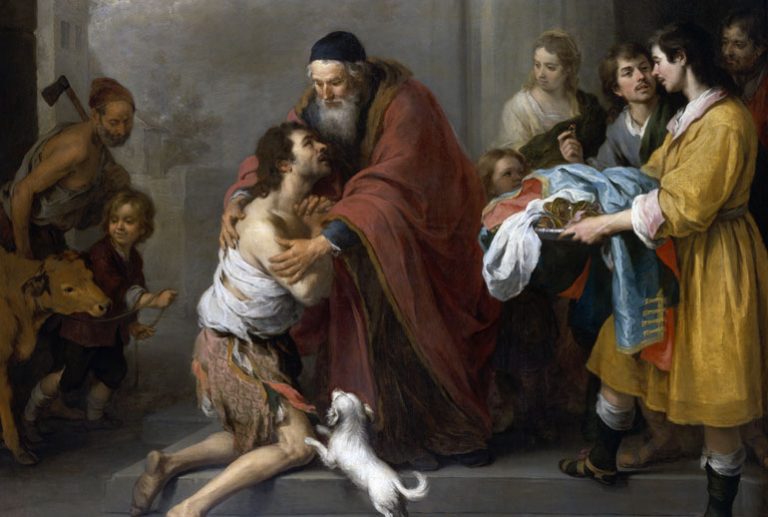
Like the father in the parable of the prodigal son (Luke 15:11–32), God is always the one who runs to meet us, embraces us, and celebrates our return. He does not wait at a distance. He moves toward us.